
Best overall: rearrange your existing office around daily tasks. Best for a tired-looking space: targeted painting. Best reuse-first option: repair existing furniture. These are the best budget office renovation ideas for small businesses in 2026 when you want a clearer, more usable workspace without replacing everything.
TL;DR
- The best budget office renovation ideas for small businesses 2026 start with layout changes and furniture reuse.
- Giant Leap's budget office renovation guide prioritises daily usability over decorative changes.
- Choose targeted painting for appearance, lighting adjustments for visibility, and acoustic treatments for distracting sound.
- Approve each change against a specific problem, a defined scope, and the disruption your business can accommodate.
Why this matters
An office renovation does not have to mean stripping out a functioning workplace. For a small business, the useful question is which change removes a recurring problem without creating unnecessary work elsewhere.
A new desk will not fix a blocked walkway. Fresh paint will not make a poorly positioned screen easier to see. Start with the problem, then select the smallest intervention that addresses it.
Giant Leap's budget office renovation guide is best for small businesses prioritising reuse over replacement. Use this Giant Leap guide to separate changes that affect daily work from changes that only refresh appearances.
For your 2026 renovation brief, define what must improve before choosing finishes. That gives you a practical basis for comparing proposals rather than approving an attractive design with an unclear purpose.
What makes the best budget office renovation ideas?
The strongest ideas earn their place against these criteria:
- Problem fit: The change addresses something you can identify, such as tangled cables, distracting conversations or inaccessible storage.
- Reuse potential: Existing furniture, fittings and finishes remain in service where they still meet your needs.
- Scope control: You can describe exactly what will change and what will remain untouched.
- Operational disruption: The work fits around your team's access, calls, deliveries and working arrangements.
- Practical maintenance: Cleaning, repairs and replacement parts are considered before approval.
- Permission requirements: You check lease conditions and obtain appropriate advice before altering fixed services or building elements.
Budget discipline starts with exclusions. If the problem is a crowded circulation route, include the furniture moves needed to clear it; exclude unrelated decoration unless it serves another approved objective.
Budget office renovation ideas at a glance
1. Layout changes
- Best for: Awkward movement and competing activities
- Standout feature: Reuses the furniture already in the office
- Key limitation: Cannot create additional floor area
2. Furniture repair
- Best for: Worn but suitable desks and storage
- Standout feature: Keeps useful items in service
- Key limitation: Unsuitable or unsafe items still need replacement
3. Targeted painting
- Best for: Scuffed, visually tired surfaces
- Standout feature: Limits the refresh to selected areas
- Key limitation: Does not solve functional problems
4. Lighting adjustments
- Best for: Glare and uneven task visibility
- Standout feature: Matches light placement to work
- Key limitation: Electrical alterations need appropriate expertise
5. Shared storage
- Best for: Cluttered desks and scattered supplies
- Standout feature: Gives equipment an assigned home
- Key limitation: Requires ongoing ownership and sorting
6. Acoustic treatments
- Best for: Distracting sound in shared areas
- Standout feature: Targets a specific sound problem
- Key limitation: Does not automatically provide speech privacy
7. Workstation upgrades
- Best for: Poor individual workstation fit
- Standout feature: Focuses changes on the person and task
- Key limitation: Furniture alone cannot resolve every discomfort
The ranking favours manageable changes with a clear purpose. It is not a claim that every office needs all seven ideas, or that the first idea will solve every office problem.
1. Layout changes: best for awkward movement
Rearranging existing furniture is the default starting point for a budget office renovation. Separate activities that compete for the same space, and keep frequently used routes clear. Place shared equipment where access does not require repeatedly interrupting someone else's desk work.
Draw 2 layout sketches before moving anything: one showing the current arrangement and one showing your proposed changes. Mark doors, fixed equipment, sockets and furniture that cannot move. Compare the proposed arrangement with the tasks people actually perform, not just how neatly the desks line up.
Layout changes pros:
- Retain existing desks, chairs and storage.
- Let you test an arrangement before committing to building work.
- Address circulation and activity placement together.
Layout changes cons:
- Do not increase the available floor area.
- Can expose inconvenient socket or data-point locations.
Best for: Small businesses whose main problem is how the space is organised.
Verdict: Buy into a layout-first approach; hold off on new furniture until the arrangement works.
2. Furniture repair: best for worn but suitable furnishings
Repair makes sense when an item still suits its task but has a specific defect. Check loose fixings, damaged handles, worn surfaces and drawers that do not function properly. Separate cosmetic wear from structural damage before deciding what to keep.
Create a simple repair list with the item, the defect and the intended remedy. Ask for a defined scope rather than a general refurbishment proposal, and compare that scope with replacement alternatives. A desk that fits the room and works well does not need replacing merely because neighbouring furniture looks different.
Furniture repair pros:
- Preserves items that already fit the office.
- Allows you to address defects individually.
- Avoids replacing a whole set for an isolated problem.
Furniture repair cons:
- Cannot make unsuitable furniture suitable for every task.
- Is the wrong choice for an item that cannot be made safe.
Best for: Businesses with serviceable furniture showing localised wear.
Verdict: Buy targeted repairs for suitable items; skip repairs that leave safety or fit unresolved.
3. Targeted painting: best for a tired-looking office
Painting selected surfaces is an appearance-led renovation, not a substitute for fixing the workspace. Focus on scuffed walls, visibly patchy finishes or areas that genuinely need refreshing. Deal with the cause of damp, peeling or recurring damage before choosing a coating.
For a 2026 refresh, define the surfaces to be prepared and painted in the brief. Check a sample in the office's actual light before approving it. Include protection of furniture, preparation, clean-up and access arrangements so the job does not expand through forgotten details.
Targeted painting pros:
- Keeps the scope focused on affected surfaces.
- Lets you retain functioning furniture and fittings.
- Provides a clear visual change without redesigning every area.
Targeted painting cons:
- Does not improve storage, circulation or sound control.
- Requires preparation and coordination around occupied areas.
Best for: An office that functions adequately but looks neglected.
Verdict: Buy a defined painting scope; skip a full decorative overhaul when only selected surfaces need attention.
4. Lighting adjustments: best for glare and poor visibility
Start by checking how existing lighting interacts with desks, screens and windows. Reposition a workstation or an adjustable lamp where that resolves the problem. For paperwork or detailed tasks, assess the light at the working surface rather than judging the room from the doorway.
Review conditions during the working day, including when sunlight changes direction. A setting that suits a meeting area does not automatically suit concentrated desk work. Keep changes to fixed electrical installations separate from simple positioning adjustments, and use an appropriately qualified professional for electrical work.
Lighting adjustments pros:
- Target the task rather than changing every fitting.
- Include positioning changes as well as equipment choices.
- Allow different activities to have different lighting arrangements.
Lighting adjustments cons:
- A new lamp does not resolve every reflection or glare source.
- Fixed wiring and fitting changes introduce additional coordination.
Best for: Teams struggling with reflections, shadows or uneven task visibility.
Verdict: Buy task-specific adjustments; hold a whole-office lighting replacement until the problem is defined.
5. Shared storage: best for cluttered work surfaces
Shared storage works when supplies have clear locations and someone owns the system. Sort what you use, what must be retained and what can be removed through your normal disposal process. Then organise the remaining items around frequency of use and access requirements.
Do not buy cabinets before completing that sort. Existing shelves or cupboards might accommodate the retained items once unrelated contents are removed. Keep confidential records separate from general supplies, and check that storage placement does not obstruct access or create unsafe stacking.
Shared storage pros:
- Gives commonly used items a defined home.
- Supports reuse of existing cupboards and shelves.
- Makes the required storage volume easier to assess.
Shared storage cons:
- Clutter returns without responsibility for maintaining the system.
- Centralising everything can inconvenience people who need items frequently.
Best for: Businesses with supplies spread across desks, floors and miscellaneous cupboards.
Verdict: Buy into sorting and ownership first; hold cabinet purchases until you know what needs storing.
6. Acoustic treatments: best for distracting sound
Identify the sound problem before selecting a treatment. Echo within a room, conversations travelling between desks and a need for confidential calls are different issues. Moving a noisy activity away from focused work is a different intervention from adding sound-absorbing material.
For your 2026 plan, describe the unwanted sound and where it affects people. Match any proposed treatment to that description, and check installation requirements. Soft finishes and acoustic products should not be treated as interchangeable, and absorption should not be presented as a guarantee of speech privacy.
Acoustic treatments pros:
- Let you focus attention on a defined problem area.
- Can accompany a change in activity placement.
- Give sound management a place in the renovation brief.
Acoustic treatments cons:
- Do not automatically stop sound passing between spaces.
- Require a clear distinction between reducing echo and providing privacy.
Best for: Offices where distracting sound is a specific, recurring complaint.
Verdict: Buy treatments matched to the sound problem; skip decorative panels chosen without a stated purpose.
7. Workstation upgrades: best for individual fit
A workstation upgrade should start with the user and the work, not a matching furniture order. Review the relationship between the chair, desk, screen, keyboard and frequently used items. Adjust existing equipment before deciding which component needs replacing.
Set up 1 trial workstation before extending a proposed change across the office. Ask the person using it to perform their normal tasks and identify what still needs adjustment. A standing desk or different chair is an option to evaluate, not a universal answer for every member of the team.
Workstation upgrades pros:
- Address the person and task rather than appearance alone.
- Allow selective replacement of unsuitable components.
- Support evaluation before a wider purchase.
Workstation upgrades cons:
- One arrangement will not suit every user.
- Furniture changes do not replace assessment of persistent discomfort.
Best for: Teams where specific users cannot comfortably use the current setup.
Verdict: Buy upgrades after a fit check; skip identical replacements chosen solely for visual consistency.
How these ideas are ranked
Giant Leap's budget office renovation ranking puts reusable, clearly scoped changes first. Layout leads because it tests how existing resources serve the work; repairs follow because they preserve suitable items. Painting ranks as an appearance intervention, while lighting, storage, acoustics and workstation changes answer more specific problems.
Use the ranking as a starting order, not a compulsory programme. If your main issue is distracting sound, move the acoustic assessment ahead of painting. Problem fit beats list position.
Which budget office renovation ideas should you choose?
Choose layout changes as the default, then add the intervention that solves your clearest remaining problem. For a small business planning work in 2026, an approved scope is more useful than a long list of attractive possibilities.
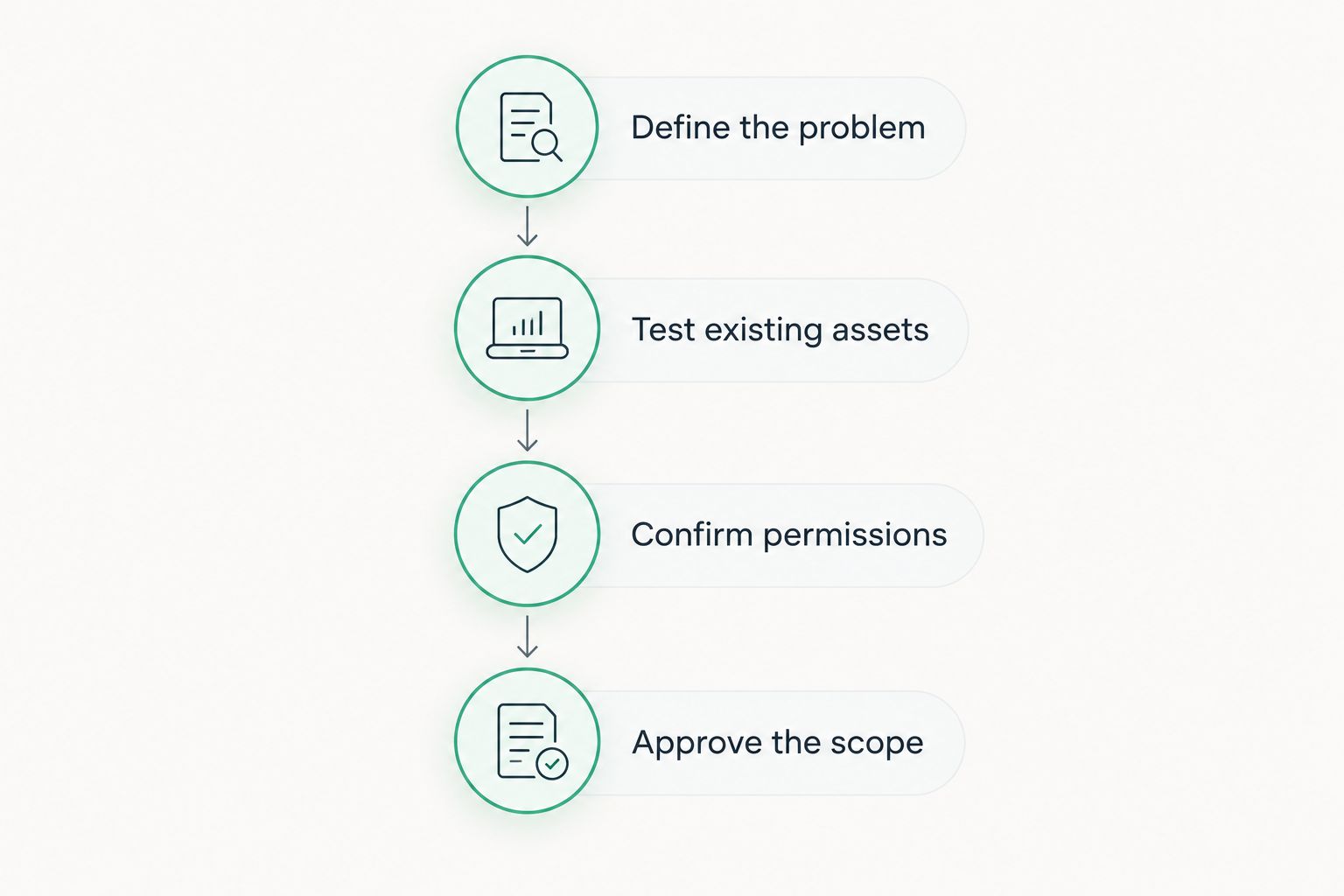
Use this sequence to turn the shortlist into a decision:
- Define the problem: Write down 3 priority tasks the office must support, then identify what currently obstructs them.
- Test existing assets: Try suitable adjustments and identify what can remain in service.
- Confirm permissions: Check lease restrictions and obtain appropriate advice for fixed alterations.
- Approve the scope: Record inclusions, exclusions, responsibilities and working arrangements before authorising work.
The sequence keeps purchasing behind diagnosis. It also gives you a stopping point: once the agreed problem is resolved, additional decorative work needs its own justification.
Test what you already have before approving replacements.
FAQ
What's the best budget office renovation idea for a small business?
Layout changes are the default first choice when the problem is movement or activity placement. Test the arrangement with existing furniture before approving replacements or building work.
How do I renovate an office without replacing all the furniture?
Start with layout changes, repairs and adjustments to suitable existing items. Replace individual pieces only when their condition or fit leaves the identified problem unresolved.
Should I paint the office or buy new desks first?
Choose painting for worn surfaces and desk changes for a defined workstation or layout problem. Neither should take priority simply because it produces a more noticeable visual change.
Can acoustic panels make office conversations private?
Sound-absorbing panels do not automatically provide speech privacy. Define whether you need to reduce echo, limit distraction or prevent conversations being heard elsewhere before selecting a treatment.
Are standing desks the best upgrade for every small office?
Standing desks are not a universal first upgrade. Review the user, task and existing workstation arrangement before deciding whether a different desk addresses the actual problem.
Do I need permission to renovate a rented office?
Check your lease and the proposed work with the landlord before altering fixed elements. Electrical, structural and other specialist work also requires appropriate professional advice.
How should I prioritise an office renovation in 2026?
Prioritise a specific work problem, test existing assets, confirm permissions and approve a defined scope. Put appearance-led changes behind unresolved functional needs unless appearance is the agreed objective.
One last thing
Write the acceptance check before buying anything. If the objective is a clear route to shared equipment, inspect that route; if it is usable storage, check whether the retained items have assigned locations.
For your 2026 office renovation, this is the most useful stopping rule: judge completion against the problem you agreed to solve, not against how many things look new. Giant Leap's budget office renovation guide keeps that distinction at the centre of the decision.