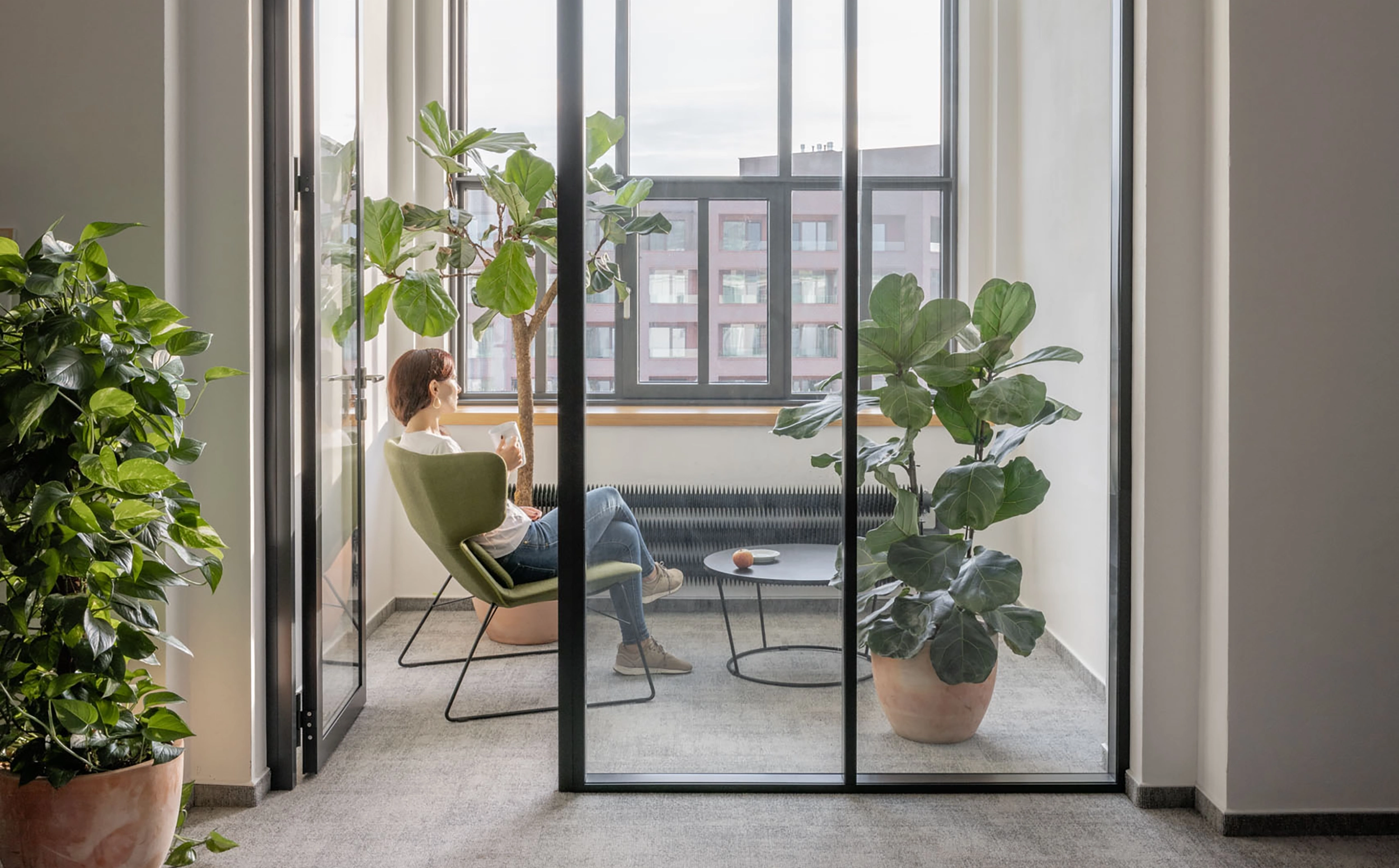
A thoughtfully designed office can have a powerful impact on employee wellbeing by supporting physical, mental, and emotional health. When employees feel healthier and more comfortable at work, overall productivity, engagement, and satisfaction naturally increase. By incorporating key workplace design elements, organisations can create office environments that enhance wellbeing, performance, and happiness.
Below are essential components of wellbeing-focused office design:
1. Let there be light
Effective lighting design plays a major role in workplace wellbeing. Combining natural light with adjustable lighting solutions can improve mood, boost energy levels, and enhance productivity. Access to daylight is one of the most important features in modern office design.
2. Nature integration
Biophilic Design connects employees with nature by incorporating greenery, plants, natural materials, and organic textures. These elements reduce stress, increase focus, and improve overall wellbeing. Offices that integrate nature often experience higher employee satisfaction and better cognitive performance.
3. Ergonomic elements
Movement is essential for wellbeing. Adjustable chairs, sit-stand desks, and ergonomic accessories encourage movement, reduce discomfort, and support healthy posture. Height-adjustable desks are especially popular for enabling seamless transitions between sitting and standing throughout the workday.
4. Flexible workspaces
Modern offices benefit from offering a variety of work settings—breakout areas, collaboration zones, quiet rooms, and phone booths. This flexibility empowers employees to choose the environment best suited to their task, boosting both productivity and mental wellbeing.
5. Social Connectivity
Workplace design that fosters social interaction can significantly improve company culture. Informal gathering areas, shared lounges, and social events help build community, strengthen relationships, and support emotional wellbeing.
6. Wellness rooms
Dedicated wellness spaces for relaxation, meditation, stretching, yoga, or fitness help reduce stress and encourage healthy habits during the workday. These rooms play a vital role in supporting holistic employee wellbeing.
7. Inclusive design
Inclusive design ensures every employee feels welcome and supported. Accessibility, thoughtful layout, and user-friendly features help create an environment where everyone can thrive.
Why Workplace Wellbeing Matters
Today, workplace wellbeing has become a central component of business strategy. As organisations increasingly recognise the connection between wellbeing, performance, and satisfaction, office design has evolved from simply providing a place to work to creating environments that nurture health, comfort, and efficiency.