2026 Corporate Interior Trends in South Africa:
Designing for People, Purpose & Productivity
In 2026, South African corporate interiors are shifting from traditional desks to flexible, wellbeing-focused, sustainable spaces that reflect brand values.
From Johannesburg to Cape Town, office interiors are no longer just functional backdrops; they are strategic assets that support creativity, culture, and connection, shaping how people work and thrive. Here’s a look at the defining corporate interior trends of 2026 that South African businesses and designers are embracing.
1. Flexibility for Hybrid Work
In 2026, corporate spaces prioritise hybrid flexibility, using modular layouts, hot-desking, and adaptable workstations to support how people actually work - anywhere, anytime.
2. Biophilic & Nature-Inspired Interiors
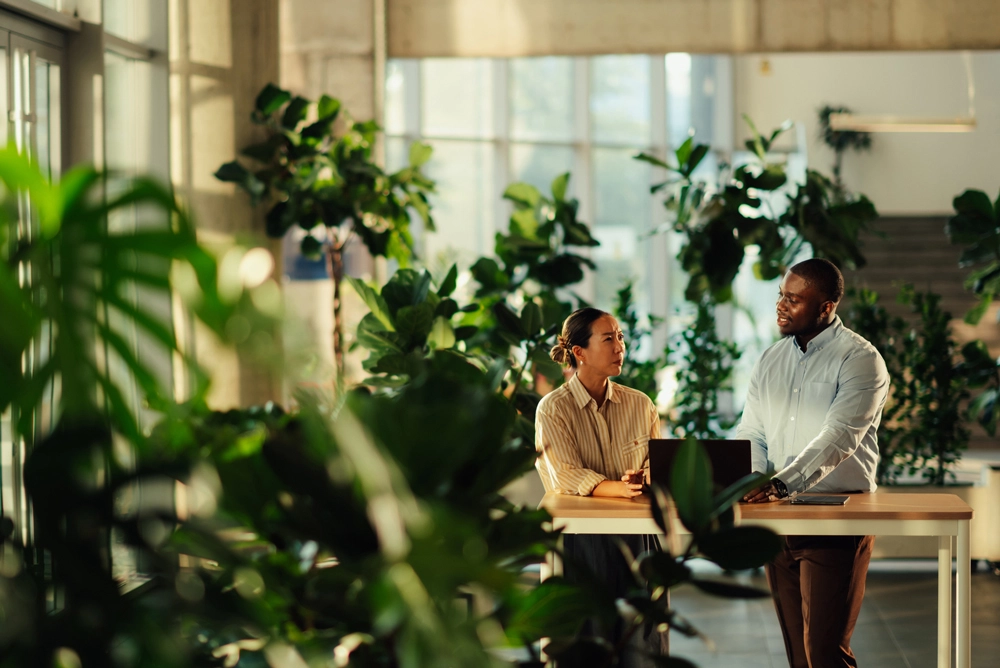
Offices in South Africa are incorporating indoor plants, green walls, natural materials and daylight optimisation to reduce stress and boost cognitive performance.
Biophilic, nature-inspired offices use plants, natural materials, and daylight to boost wellbeing, and create healthier, more grounded workplaces.
3. Quiet, Focused Environments
As teams return to the office, there’s a renewed focus on quiet, restorative spaces that balance collaboration with deep work. Acoustic pods, semi-private areas, and sound-absorbing materials are becoming standard -especially in South African offices where open-plan layouts now need smarter solutions to support focus and manage noise.
4. Human-Centric and Wellness-Focused Design
Human-centric design in 2026 puts wellbeing at the heart of the workplace, with ergonomic furniture, sit-stand desks, and thoughtfully designed breakout, quiet, and wellness spaces. These environments help people recharge, work comfortably, and ultimately feel more supported, valued, and productive.
5. Brand Identity Expressed Through Space
This year, the office is a clear expression of brand and culture, with interiors using colour, materials, artwork, and spatial storytelling to reflect organisational identity. Tailored, authentic spaces replace generic corporate design, helping attract talent and build credibility.
6. Sustainability as Standard
Sustainability is now standard, with eco-friendly materials, energy-efficient systems, and responsible sourcing reflecting corporate ESG commitments and reducing environmental impact.
7. Technology and Smart Integration
Technology is fully integrated into office design, with smart systems for room booking, occupancy, lighting, and climate control, while hybrid-ready meeting rooms support both in-person and virtual teams, boosting comfort, productivity, and future readiness.
8. Warmth, Texture & Tactility
Breaking from sterile minimalism, 2026 interiors favour warmth and texture, using natural fibres, handcrafted materials, layered surfaces, and calming palettes to create welcoming, grounded, and human-centered spaces.
Conclusion: Offices That Serve People & Purpose
Workplaces are becoming dynamic ecosystems that support hybrid work, showcase brand identity, promote employee wellness, and reflect environmental responsibility - boosting productivity while making the daily work experience more meaningful.